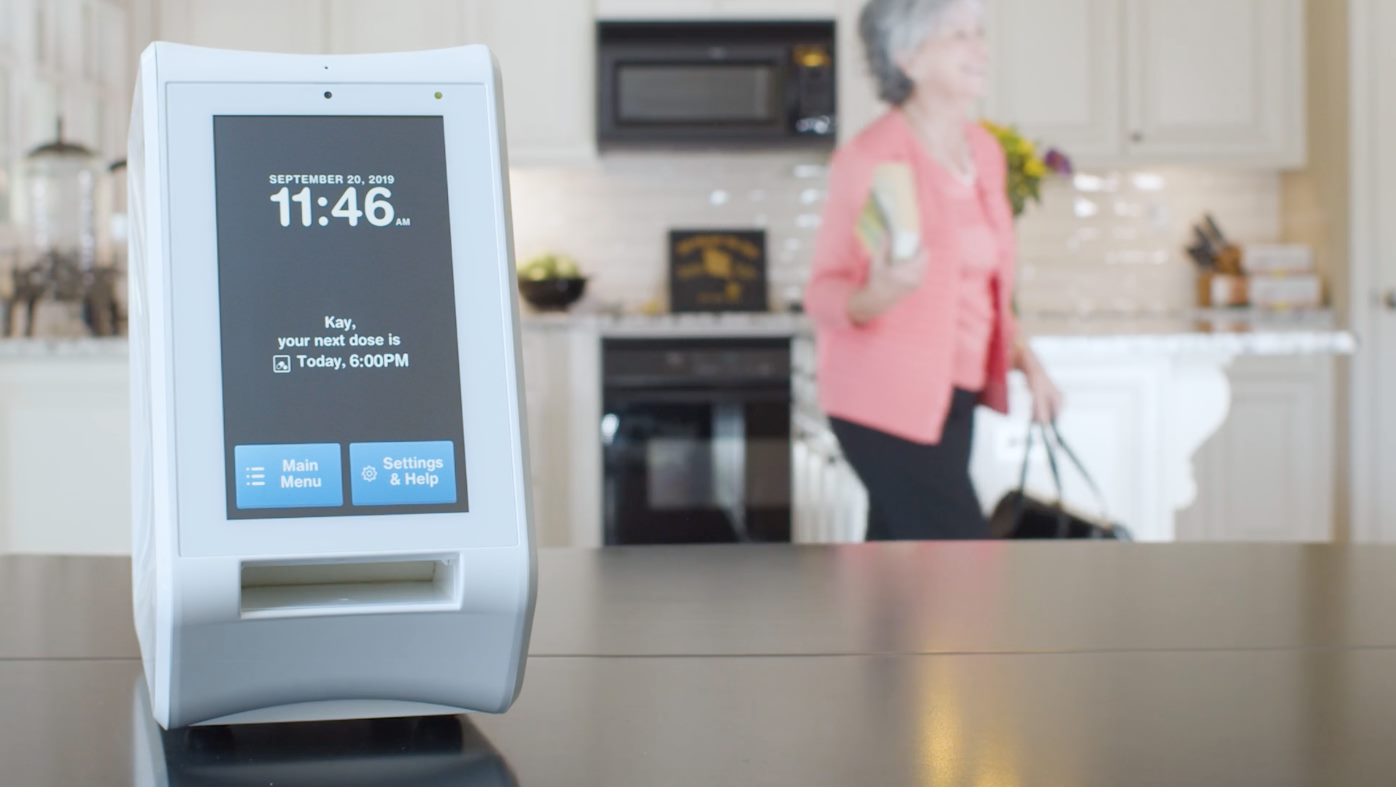
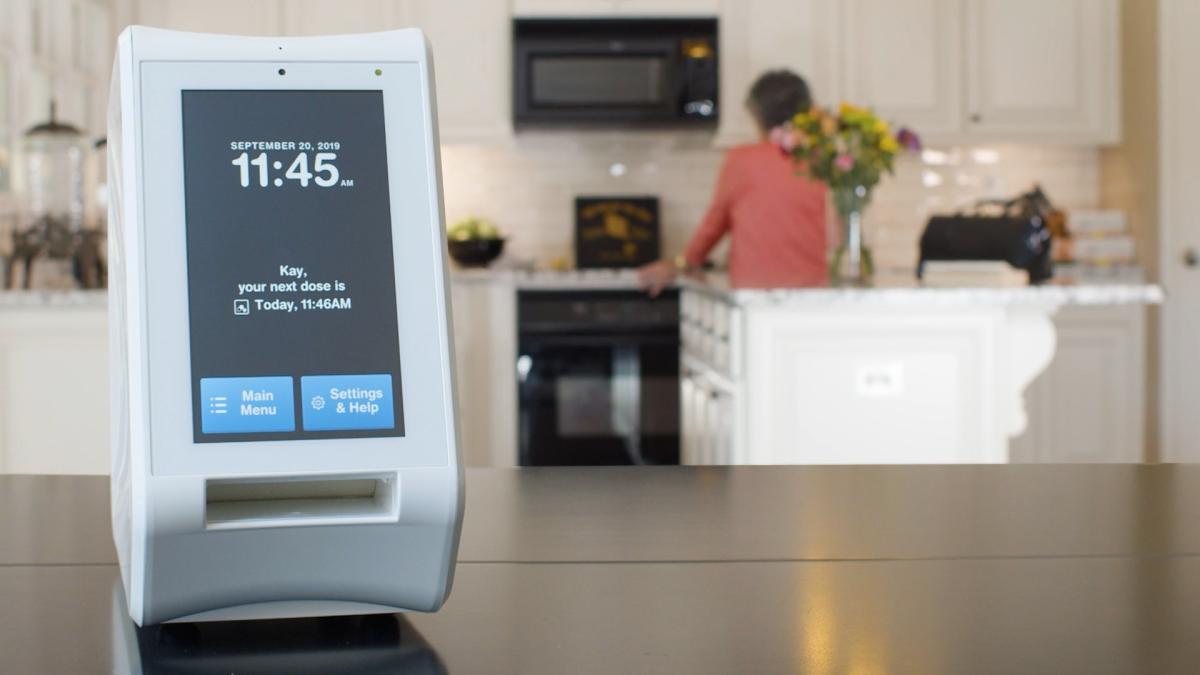
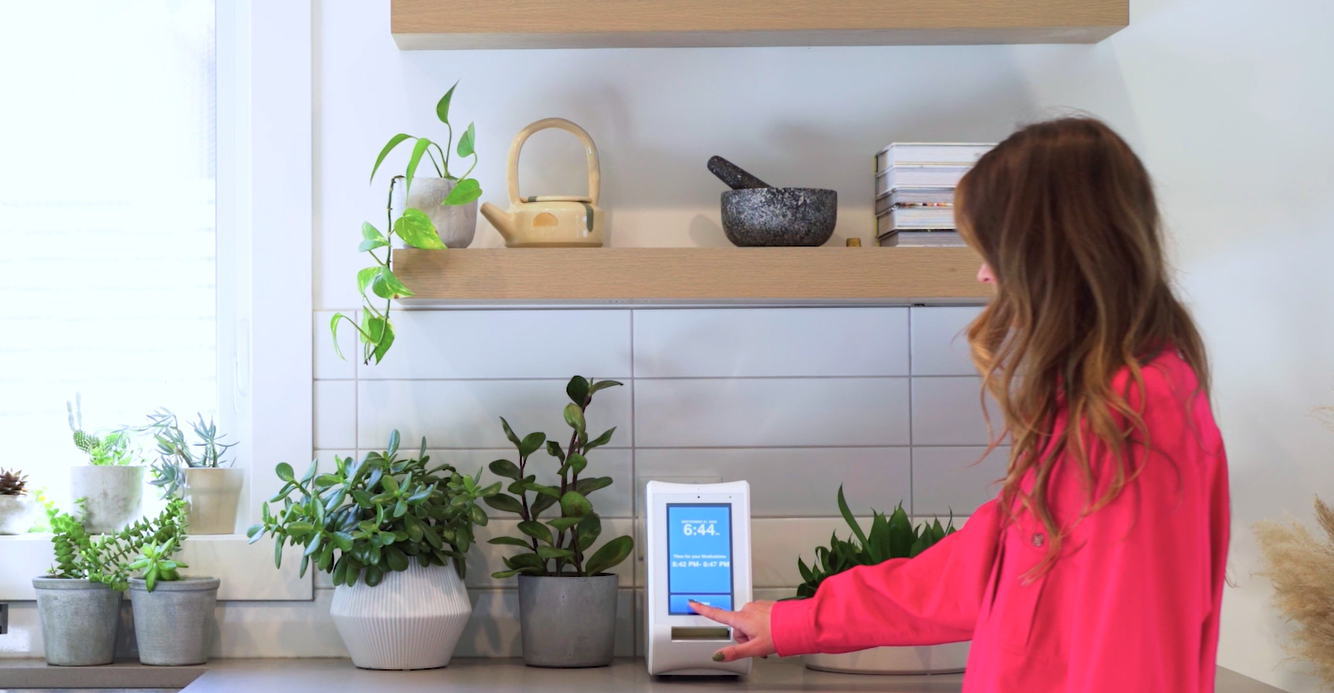
Connected Medication management in the Home
Medication use between visits is largely invisible.
Patients fall out of routine, symptoms change, and risks emerge without timely intervention.
Custom Health brings structure, visibility, and pharmacist-led clinical oversight into the home.
The following studies reflect how this model performs across both real-world use and controlled clinical settings.
Real-World Evidence: Observational Study with the University of Waterloo
A prospective observational study conducted with the University of Waterloo School of Pharmacy, and published in the Journal of Medical Internet Research, evaluated the use of an in-home medication dispensing hub over a six-month period.
Patients used the system as part of their normal routines, with no alteration to standard care protocols.
Summary:
- 98% medication adherence over six months
- 86% System Usability Score (SUS)
- Reduction in caregiver burden
This study demonstrates that structured medication management can be successfully integrated into daily life, with strong patient and caregiver acceptance.
Controlled Evidence: Randomized Controlled Trial with Alberta Health Services
A randomized controlled trial conducted by researchers at Alberta Health Services, published in BMC Geriatrics and Medical Devices: Evidence and Research, evaluated the impact of a medication home hub compared to usual care in older adults living with chronic conditions.
Participants using the system received guided medication prompts, real-time monitoring, and pharmacist-led follow-up based on adherence signals.
Summary:
- ~98% medication adherence over six months, higher than control
- Improved patient-reported health outcomes compared to usual care
This study demonstrates that adding structure and visibility to medication use can improve adherence and patient-reported outcomes relative to standard care.
What This Shows in Practice
Across both real-world and controlled settings, consistent patterns emerge:
- Medication adherence improves when use is structured and monitored in the home
- Visibility into dose-level behavior enables earlier intervention
- Patients and caregivers are more supported without added complexity
These outcomes reflect what happens when medication use is continuously observed, interpreted, and acted on through a coordinated system of pharmacy, technology, and clinical care.
Explore the Clinical Evidence
- Observational study in Journal of Medical Internet Research (University of Waterloo)
- Randomized controlled trial in BMC Geriatrics (Alberta Health Services)
- Supporting analyses in Medical Devices: Evidence and Research (Alberta Health Services)
Talk to our team about deploying connected medication management.